
BayHaus Creative logo PODCAST VIDEO STUDIOSAN FRANCISCO Book Your Session

Guide · from zero to episode 10

How to start a podcast in San Francisco.

A practical 2026 path to start a podcast in San Francisco: format, gear or studio, recording, editing, publishing, and the first 10 episodes. With the real local costs at every step.

You start a podcast in San Francisco with five decisions: a format, a place to record, an editing pipeline, a publishing setup, and a 10 episode commitment. Budget-wise, a home rig runs $300 to $1,500 in gear, self-serve rooms rent for $40 to $150 per hour, and full-service studios with an engineer run $300 to $500 per hour. Most new shows launch inside 6 weeks once the format is locked.

1. Start a podcast in San Francisco: niche and format first

Every durable show we see in our studio answers one question: who is this for, and what do they get every episode. "Founders explaining hard technical calls" beats "conversations about tech." Narrow wins in a city with this much podcast competition.

Then lock the format before you buy anything or book anything:

  • Interview, 45 to 60 minutes. The default for a reason: guests bring the content and share the episode.
  • Solo, 10 to 20 minutes. Cheapest to produce, hardest to sustain. A teleprompter helps enormously here.
  • Co-hosted, 30 to 45 minutes. Easiest energy on tape, needs two calendars that agree.

Decide on video at the same time. In 2026, video is where discovery happens: YouTube and short clips are how new listeners find shows. Audio-only is still valid for commuter-style listening, but plan the video question deliberately rather than by default.

2. Decide where you record: the real SF numbers

San Francisco gives you three options, and the honest answer depends on your format and your patience for gear.

At home: a solid starter kit is a dynamic USB mic ($100 to $300), a light ($60 to $150), and a camera or a recent phone on a tripod. Expect $300 to $1,500 all-in and a learning curve measured in weekends. Acoustics are the usual weak point: soft furniture and a small room beat an echoey loft every time.

Self-serve rooms: $40 to $150 per hour around the city. You get a treated room and gear, and you operate everything yourself. Fine for audio-first shows once you know your way around a recorder. Our comparison of full-service versus self-serve studios lays out the failure modes of each.

Full-service studios: $300 to $500 per hour with an engineer, multi-cam 4K, and lighting handled. Our studio in North Beach is $450 per hour with a 1-hour minimum, and the full market picture is in our guide to podcast studio rental cost in San Francisco. The tradeoff is simple: money for time and quality floor. A first-time host in a full-service room sounds like episode 50 on episode 1.
$300+Starter home rig
$40 to $150/hrSF self-serve rooms
$300 to $500/hrSF full-service studios
$595Our per-episode edit
A kit to start a podcast in San Francisco: dynamic microphone, headphones, LED light, and a laptop showing an audio editing timeline
A starter kit: a mic, headphones, a light, and an edit timeline

3. Record episodes 1 to 3 in one sitting

Launching with a single episode strands your first listeners. Record three in one block: guests back to back in a studio session, or a long home afternoon. Batching also forces the habit that keeps shows alive past episode 7, which is where most podcasts quietly stop. In our studio, three 45 minute episodes fit inside a 3 hour video podcast recording block, engineer included, and you leave with raw 4K plus separated audio the same day.

4. Set up the edit pipeline

Editing is where new podcasters burn out, so choose the pipeline before episode 1. Bay Area freelance editors run $50 to $150 per hour and a typical episode takes 3 to 5 hours of work. Agencies charge $300 to $1,500 per episode. DIY with modern tools is free and costs you evenings. Our flat rate is $595 per episode: the edit, a 1-minute intro, 3 social clips, and color plus audio cleanup. The full market breakdown lives in our podcast editing cost guide.

5. Publish: host, feed, and YouTube

Pick a podcast host (typical plans run $0 to $20 per month), which generates your RSS feed. Submit the feed once to Apple Podcasts and Spotify; every episode after that distributes automatically. Post the video version to YouTube as its own channel, and cut clips for Shorts and LinkedIn. One recording, four surfaces.

Before you hit publish

The launch checklist, in order.

01

Name, cover art, and a one-line promise

The cover reads at thumbnail size and the one-liner tells a stranger exactly what they get. Test both on five people in your audience.

02

Trailer plus three episodes recorded

A 2 minute trailer sets expectations; three episodes give new listeners a binge. Record all four before announcing anything.

03

Feed live on Apple and Spotify

Submit the RSS feed a week before launch day. Approval usually takes a few days, and you want the links ready for the announcement.

04

Launch day: everything at once

Trailer and three episodes drop together. Post the strongest clip on every channel you already have, and ask your first guests to share their episodes.

05

Commit to episodes 4 through 10

Weekly or biweekly, on a schedule you can actually hold. Consistency for 10 episodes beats a hot launch that fades in a month.

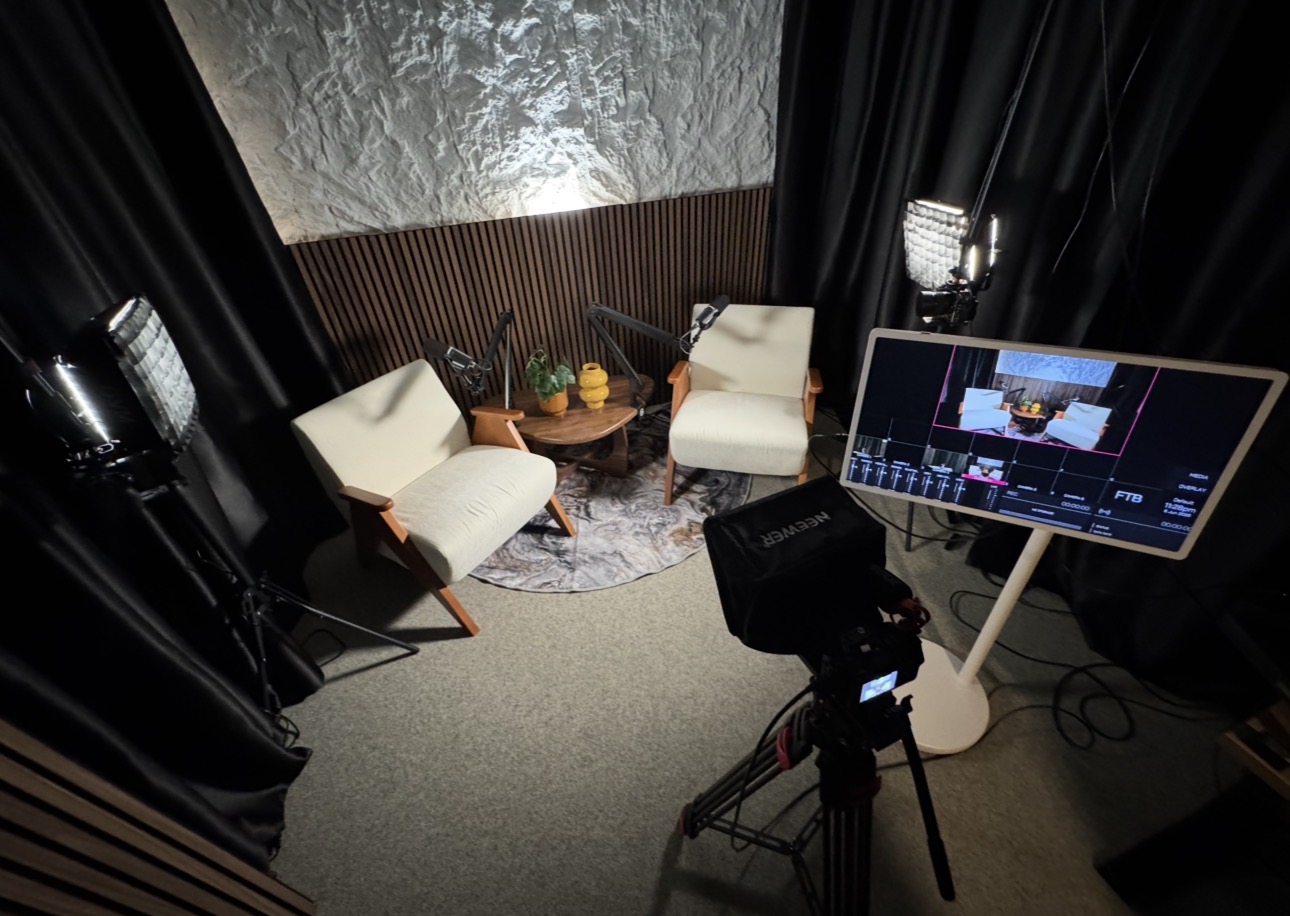
Podcast and interview set in San Francisco with round table, broadcast mics, and three cameras ready for a first episode The podcast set · 50 Francisco St

A shortcut through steps 2 and 3

Start a podcast in San Francisco in a room that already works.

Plenty of great shows start at a kitchen table. The studio route trades money for a finished sound on day one: an engineer runs cameras, audio, and lighting, the room is pre-lit, and you leave the same day with raw 4K and separated audio. Come see both sets on a free 15 minute tour before you decide either way.

Starting out FAQ

Questions from first-time hosts.

How much does it cost to start a podcast in San Francisco?+

A home setup runs $300 to $1,500 in gear plus hosting at $0 to $20 a month. Recording in a self-serve room costs $40 to $150 per hour, and a full-service studio with an engineer runs $300 to $500 per hour. Editing adds $50 to $150 per hour freelance, or a flat $595 per episode with us.

Do I need expensive gear to start a podcast?+

A $150 dynamic mic in a soft-furnished room gets you a listenable show. Upgrade the room before the gear: acoustics shape your sound more than the microphone price tag. Studios exist for exactly the episodes where quality matters most.

How many episodes should I launch with?+

A trailer plus three full episodes. New listeners binge when they find a show they like, and three episodes turn a curious click into a subscriber.

Should my podcast be on video?+

For growth in 2026, yes. YouTube and short vertical clips are where new audiences discover shows. Audio-only still works for established audiences and commuter listening, but video multiplies your discovery surface.

How long does it take to launch a podcast?+

Four to six weeks is realistic: a week for format and name, a week for art and setup, one recording block for the trailer and first three episodes, then editing and feed approval.

Record episode one this month.

Engineer included, room pre-lit, files on your drive the same day.

or call/text (510) 244-8537